‘Why bother?’ – if you have never thought about sustainability in terms of heritage and education, or have only touched on it, there are several reasons to engage, or engage further:
– Public interest: Society is in a state of rapid change not least about rising energy costs and more generally the cost of living. There is evidence that, increasingly, young people are expecting educational and other institutions to address sustainability-related issues. Since 2010, around 80 per cent of university students have said that they want their institutions to be doing more on sustainability, and around 60 per cent want to learn more about it. And first-year students said that the environmental credentials of their university were important in selecting a place to study, and just under 40% believed that how seriously their university took global development issues was important. (https://www.sos-uk.org/research/sustainability-skills-survey )
As this report(https://www.historicenvironment.scot/archives-and-research/publications/publication/?publicationId=c6f3e971-bd95-457c-a91d-aa77009aec69 ) sets out the existential threats of climate change is the fastest growing global risk to many of the World’s Heritage (WH) Sites. Many WH properties around the world are already experiencing significant negative impacts, damage, and degradation. These and many others are vulnerable to climate impacts, including those from rising temperatures, sea level rise, extreme precipitation, flooding, coastal erosion, drought, worsening wildfires, and human displacement, and will be at risk in the future. Recently observed trends are expected to continue and accelerate as climate change intensifies.
– Relevance: Sustainability and heritage education can be helpful by introducing immediate context (local, regional, global and ‘in the news’ relevance) to public lectures, renewal of and diversity in heritage related events, and better motivation among staff and volunteers. It can make a major contribution to professional development planning and building the kinds of values and attributes that UNESCO and other professional bodies currently aspire to.
– Community links: are a rich source of potential for both students and volunteers undertaking placements, work experience and voluntary activity, and links between schools and universities and the wider community including businesses or industry (local or national). The war in Ukraine and the ensuing energy crisis has led to a renewed interest in Community Energy. This and the climate emergency has put a much greater policy priority on energy security and its impact on escalating energy prices and the cost of living. Consequently, the future of energy is renewable, zero-carbon, flexible, smart, and local. Community energy is also key to delivering an engaged citizenry who will participate actively in these changes and in how energy is generated and used. The importance of and diverse services provided by community energy have been recognised at the highest levels in government.
Here in Derbyshire, there is a growing collective vision of a stronger, better informed, and capable community movement well able to take advantage of their renewable energy resources and address their energy needs in ways that builds a more localised, democratic, and sustainable energy system.
Derbyshire Dales Community Energy Ltd (DDCE Ltd) is seeing growing evidence of interest and motivation of people and groups in community energy willing to contribute to averting climate catastrophe, coupled with a desire to bring about community benefit. We believe that failure to harness this capacity is to plan to fail to achieve our collective net zero targets.
Community energy grew exponentially, more than doubling every year between 2014 and 2017 but for the last 5 years policy changes have mostly thwarted the sector such that community energy now struggles to make a business case to get active at all. This is fast changing with the advent of new and innovative financial ideas which this business case develops further later.
Policy changes include the removal of ROCs, the Feed-in Tariff, Export Tariff, the Urban Community Energy Fund and Tax Relief, punitive business rates on roof-top solar, planning constraints on on-shore wind and increasing VAT on solar panels, batteries and ‘energy saving measures’ from 5% to 20%.
This threatens to waste a dynamic, community-embedded army of potential supporters who would be a vital ally if they were enabled to get active – which would produce multiple economic, environmental, social and community returns on investment that would far outweigh the upfront government investment. The Friends Provident Foundation, leaders, and pioneers in investing in social change, have said, “There is nothing that provides higher social and environmental returns on investment than community energy”
- Ethics, reputation, and quality agenda: There is a growing interest in the links between the quality agenda and sustainability and heritage education, and the potential of it to raise performance and profile and help to develop innovation.
– Sustainability performance marketing and reputation: many organisations are more than ever before striving to improve their sustainability credentials and performance as measured by many different types of league tables-like the People and Planet Green League ( http:// peopleandplanet.org/green league) and environmental and social responsibility schemes such as Learning in Future Environments (http://www.thelifeindex.org.uk/).
– Employers’ views: There is growing evidence that employers are seeking employees with ‘green’ and ‘sustainability’ skills (BITC 2010) in relation to the low carbon economy, and uncertainty in socio-economic conditions. Green skills are the building blocks of the green transition and the key to unlocking the human capital that will power it. We need more opportunities for those with green skills. We must upskill workers who currently lack those skills. And we need to ensure green skills are hardwired into the skillset of future generations. Green-skilling is needed to fuel greener jobs.
– What is sustainable development? ‘Sustainable development’ describes the processes and activities that help ensure social, economic, and ecological wellbeing, at any focus – local, regional, global – where these three dimensions are seen as systemically interdependent and inseparable. By contrast, unsustainable development has a deleterious effect on at least one of these dimensions of wellbeing. Sustainability is at the heart of the Earth Charter Initiative, an international declaration of fundamental ethical principles for building a just, sustainable, and peaceful global society in the 21st century. Its mission is to: … promote the transition to sustainable ways of living and a global society founded on a shared ethical framework that includes respect and care for the community of life, ecological integrity, universal human rights, respect for diversity, economic justice, democracy, and a culture of peace. (See: http://www.earthcharterinaction.org/content/) .
Most people in the world today have an immediate and intuitive sense of the urgent need to build a sustainable future. They may not be able to provide a precise definition of sustainability … but they clearly sense the danger and the need for informed action. World Heritage sites like Cromford Mills offer practical examples of low carbon industrial practice and can contribute to helping visitor interest in sustainability by providing tangible and symbolic and culturally important examples. Interest and activity in sustainable development is driven by rising concern in public life and wider society as people in all sectors become increasingly aware of the negative impact and threat of sustainability issues – such as climate change, economic vulnerability, social inequity, resource depletion and biodiversity loss in conditions of increasing global population – as well as of positive opportunities to develop more sustainable lifestyles and economic activities like the growing adoption of renewable energy for homes and businesses and in new forms of low carbon transport. A recent report by the International Council on Monuments and Sites (ICOMOS) highlighted the ‘immense ‘and ‘untapped’ potential for cultural heritage to spur action on climate change and support a transition towards resilient and low carbon pathways (https://www.wmf.org/blog/cultural-heritage-changing-climate ).
Key point: In essence, sustainability is about trying to ensure a society whose economy and ecology are viable and durable now and long-term. Evidence suggests we may be on the cusp of very different patterns of social and economic organisation, in response to the end of cheap energy and the threat of climate change – necessarily towards low carbon, low waste, resource efficient, and possibly more localised economies. Such changes are increasingly reflected in government and business rhetoric. There is growing awareness that we need to rethink and re-evaluate many historical patterns of economic and social organisation if we are to assure the future.
Raising Public Engagement in Derbyshire
In January 2021, the United Nations Development Programme and University of Oxford’s Sociology Department published their survey report on what is described as the largest every public opinion survey on the climate and ecological emergency. Some 1.2 million citizens in 50 countries covering half the world’s population were interviewed. Globally, over two thirds of respondents said climate change is a global emergency requiring greater action to tackle the emergency. In the UK, this was the view of 81% of those surveyed.
In November 2021 IPSOS MORI Issues Index research revealed that worry about climate change is the biggest concern for the British public, with the issue recording its highest-ever score. Fieldwork was conducted from 5-11 November, covering the end of the COP26 climate conference in Glasgow. Significantly, concern about Covid 19 came second behind climate change.
Despite overwhelming public consensus in the UK, this concern is not being translated into widespread direct public action or indirect activism and lobbying of authorities to tackle the climate and ecological emergency, either individually or collectively. This is although in April 2021, an IPSOS MORI UK survey found that only 3 in 10 respondents think the UK government had a clear plan to tackle the climate emergency.
This lack of public engagement exists despite an almost daily stream of scientifically evidenced authoritative reports appearing in news and other media highlighting the impacts of climate breakdown already. And a widely predicted alarmingly dystopian future the level of public action and activism appears very low, including in Derbyshire. Clearly, this is a challenge that World Heritage sites like Cromford Mills can address by making their role and purpose more directly related to the growing interest in sustainability.
Incontrovertible facts, data, statistics and predictions from the IPCC and other authorities evidencing the now imminent existential threat of the climate and ecological crisis have failed to shock many people into acting at an individual level or collective level.
Locally, this is clearly apparent. Since February in Derbyshire where despite the Just Stop Oil action group leafleting around 5,000 homes in each location at Belper, Matlock, Derby and Chesterfield inviting residents to attend public meetings to discuss the climate crisis and options for action, the largest audience so far was just 15 people, an attendance rate of around 1 resident in every 300 households not auger well for the future. Albeit the meetings convened by Matlock Town Council and DDCE Ltd on community energy have involved between 40 to 50 residents and directors of local businesses. In addition, we have held successful online meetings with U3A groups in Belper and Darley Dales.
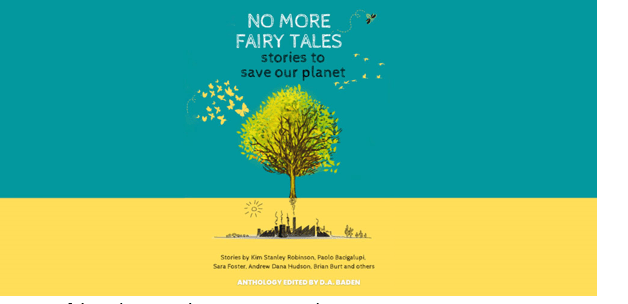
Many high-profile commentators such as Jonathon Porritt contend that mobilizing public engagement on climate change requires an alternative to the narrative of fear and impending disaster. Public engagement and then mobilization requires the creation of a story or stories that paint a vision of a far better future for everyone and their families in a decarbonized future.
This positive framing of the climate issue enables citizens to see the potential upsides to themselves. Self-interest is a powerful motivator.
This potential of self-interest to catalyze climate action across a much wider population than the very small activist community could be triggered by applying the aggregate purchasing power of Derbyshire residents as consumers rather than as potential climate activists. Community energy supported solar power (solar PV) provides the potential to do this immediately and at scale. Other more technically complex and expensive renewable energy schemes like hydro, wind and geothermal-could come later.


 transformativefuturelearning.home.blog