When will Labour take the initiative and be bold? Or are we facing yet another crisis of governance?

Our letter to John Whitby our MP

Emma Hickling and Steve Martin

We saw the Peoples Emergency briefing last week at Matlock Imperial Rooms, during the final night of the fifth heatwave that the UK has experienced this year. The next night we watched the National Emergency briefing videos on YouTube.

These briefings highlight the seriousness of the climate emergency and demonstrate how much expertise within the UK there is, with ideas of how to solve this.

Yet the Governments response to this wealth of information and ideas about the climate emergency has been distinctly lacklustre.  From the COBRA meeting the other week what emerged was a temporary ban on disposable BBQs and a mobile phone alert about the risk of wildfires; Andy Burnam is still considering licences to drill oil in the UK. There has been no acknowledgement by the Government that we are living though a polycrisis, and how they would like to reshape our society so that we can all thrive.

Andy Burnham claims to want to focus on the cost-of-living crisis, yet all of the factors that contribute to the current cost of living crisis have their roots in the climate crisis. So comprehensive policies to address climate change will also reduce the cost-of-living crisis. The multiple policy changes that need to be addressed have been outlined by the speakers at the National Emergency Briefing. Undoubtedly these expert speakers plus all their support teams would be willing to contribute to new policy decisions.

Here are some of our thoughts on how to address the cost of living and the climate emergency:

Nature

In January 2026, planning legislation was amended so datacentre developers were able to apply as nationally significant infrastructure projects, meaning they were able to largely bypass the local authority planning procedure and seek approval directly from government, i.e. datacentres are considered to be critical national infrastructure, but nature is not given this essential legal status.

Natural systems underpin human society: they provide food security, flood resilience, physical and mental health, and economic and financial stability.  All Government policies must put consideration of nature and its benefits first in all decision-making areas. Without a regenerative natural environment, we cannot have civilisation as we know it.

To do this effectively we also have to measure what matters to people. GDP (gross domestic product) is a very crude measure of the economy; it increases regardless of the harm that some economic activity causes to people and the environment. A car crash that kills people generates demand for more cars, and all the services that deal with the consequences of that crash. Yet that crash is disastrous for the people involved and their families, but it does increase GDP, because that only measures consumption. If we have a society that uses consumption as its key metric for success, then we will continue to destroy people’s lives and the natural environment.

Energy

The price that we pay for electricity is not dictated by the market but by opaque pricing strategies and Government policies. The UK has the highest electricity prices in Europe. To date the Governments only effort to help consumers is to put a cap on the price we pay for electricity.  This is a short term fix that does not address any of the structural issues around electricity pricing. The House of Commons also published comprehensive research on the complexity of the energy markets on 30 June 2025 https://researchbriefings.files.parliament.uk/documents/CBP-9491/CBP-9491.pdf. This provides information on all the Government policies that contribute to high energy prices

Renewables are the only long-term cheap source of electricity (as they are free), and the sooner the Government acknowledges this and sets in train the means to achieve this, to sooner we will have cheap electricity. This means heavy investment in wind and solar to generate electricity, storage systems to even out supply and demand fluctuations, and a major upgrade of the distribution network to enable distributed supply. It also means a commitment to no more oil from the North Sea – which would be a clear message to all investors that the UK is no longer open for investment in fossil fuels. Another benefit from this strategy would be energy security: no longer dependent on other countries, and resilient to external attacks. Russia has been targeting the key energy generators in Ukraine. Distributed energy generation systems mean that it is much more difficult for a bad actor to knock out the whole of the country’s energy supply.  There are many countries and regions across the globe that are already transforming their energy systems, e.g. Spain and Utah.

So how to fund all this investment? There are 2 paths: a) the UK can simply create the funds, because we own our own currency, this does not have to increase inflation as long as the Government has a strategy to train all the people required to do all the work. Or, b) it can come from the private sector; we know there is money in the private sector as they are willing to invest in North Sea oil. This private sector money may not like the lack of windfall returns from a renewable infrastructure, but if they want to invest in the UK, it should be the Government (and our society) that determines where that investment goes, not the individual companies. This all reflects the growing crisis of governance.

Water

  • On 13 August 2026 Ofgem announced that it would allow water companies to increase our bills to “….. meet rising demand from housebuilding and data centres and to address pollutants known as “forever chemicals“.
  • Ofgem has consistently failed to curb the excessive dividends paid to water company shareholders and payments to senior management. All this cash flowing out of the water companies has meant that inward investment by the water companies has been lacking. Now they are expecting us to pay through our water bills for additional investment in assets: shareholders take all the cash but do not invest in infrastructure; instead, the consumer pays for the infrastructure and for dividends to shareholders. This is not the markets working successfully, it is simply adding to the cost-of-living crisis.
  • Back in August thousands of people in Kent were without water because of supply problems with Southeast Water. It is unacceptable in the 21st century that water company infrastructure failure can lead to weeks without water.
  • The Environment Agency has been woefully underfunded for so many years that it has no ability to monitor and regulate the pollution caused by the water companies. This is simply another way for Water Companies to enhance their profits and make local people suffer the consequences of polluted beaches and rivers. At present the Water Companies are allowed to self-regulate; this approach is not working. There needs to be a huge increase in staff in the Environment Agency all around the UK, so that they can effectively monitor pollution from water companies and take effective action. Job creation is a good for the cost-of-living crisis, as these jobs will provide a steady income for lots of people.
  • Thames Water has invested heavily in a desalination plant in London. Since it was completed in 2011 it has barely been operational, despite Thames Water placing customers under hosepipe bans every time a drought has been declared in the Southeast. This “investment” has been funded by Thames Water customers, not its shareholders. So how has a private company been able to waste customers cash in a system that is never used, yet it does not invest the same amount in upgrading existing water treatment systems and pipework? Where are the oversight and regulation?
  • Clean water and treatment of sewage are fundamental elements of a civilised society. The last two decades have clearly shown that the privatisation of the water industry has been an abject failure in terms of provision of clean water and sewage treatment.  Therefore, the Government needs to start challenging the notion that privatisation of monopoly services is effective.

Datacentres Strategy

The Government’s strategy for datacentres shows clearly how there is no joined up thinking in terms of future developments for the UK.

Datacentres are deemed to be nationally significant infrastructure projects, because of their ability to support artificial intelligence (AI), so developers can bypass the local authority planning procedure and seek approval directly from government.

However, datacentres, such as the one in North Ockendon near London, have a massive requirement for energy and water. The developers own planning documents acknowledge that the carbon emissions from this datacentre do not align with a science-based 1.5C compatible trajectory and achieving net zero by 2050.

So why does the Government think that the value of AI capacity outweighs the physical impact of datacentres on our daily lives? Over half of the UK is now in a drought situation, with many people living in areas of hosepipe bans; all of the UK has suffered outbreaks of wildfires. None of the water companies are capable of providing sufficient water for existing customers, so how does the Government think that they can provide water for all these new datacentres and for existing customers? As for electricity, these datacentres consume vast amounts, and they expect it to be provided by the National Grid. In the planning document for North Ockenden datacentre they are proposing to install a new National Grid substation to provide additional capacity, but there no mention of where the additional electricity will be sourced from.  Presumably fossil fuels as there is no mention in the planning documents about building sufficient renewable capacity (anywhere in the UK) to supply this data centre.

So, what sort of contracts will these datacentres be entering into with the energy and water providers? Who suffers when there are water shortages? Do these data centres shut down? Or do the data centres stay open because the penalties that they extract via commercial contracts mean that the water companies cannot afford to shut off the supply? So, will the local residents suffer? Of course they will, because we have no power to get water companies to do anything. There are many instances this year of water companies’ customers in Kent being without water for weeks because of problems with infrastructure.

Who benefits from all these huge datacentres that are based in the UK using fossil fuels and our local water? Not local residents or even UK residents. All datacentres are funded by large global organisations, with opaque ownership issues; profits will undoubtably be siphoned offshore. These profits will arise because they will not be paying the social and environmental impacts of using scarce water resources and fossil fuel energy.

And what is the social purpose of Artificial Intelligence? The greenwashers will all promote its use in the health sector in being able to identify disease more quickly. And very worthwhile this is, but how much AI capacity is actually used for this purpose?

In reality,  AI has enabled criminals to cause harm to the general population at very little cost to themselves, such as nudifying images of women, creating fake videos and then posting them over social media to bully and demean women, or anyone else that they take a dislike to.

All the major search engines are using AI to provide answers to question that a person asks. Yet prior to the advent of AI, search engines had been very good at finding answers to questions with the use of excess quantities of water and energy.

And AI bots are fantastic at cyber hacking. There have been so many instances of this activity in the news lately. And who suffers as a result of the cyberhack? Us of course. Criminals get hold of our personal data, they hold companies to ransom to get their data back, and we ultimately pay for this. Services that we use on a daily basis are no longer available.

The building of huge datacentres simply makes these criminal activities easy and cheap to be carried out. AI software is sold to anyone willing to pay the monthly subscription, and the owners of the datacentres do not care what is being run on their machines as long as someone is paying.

Good Governance
Good governance is essential across the national, private and public sectors to ensure that all organisations meet the needs of their stakeholders and create momentum to reach their goals and maintain compliance with the legislation that relates to them. Yet there is ample evidence that good practice is woefully inadequate. For example:

 What can the Government do?

The Policy areas that we would like the Government to start addressing, in order to combat climate change and address the cost-of-living crisis are:

  1. Define nature as critical infrastructure and invest in its renewal.
  2. Redefine the metrics that are used to determine whether our society and economy are thriving.
  3. Change societal norms
    1. Acknowledge that we cannot rely on technology (e.g. carbon capture and storage and other mega interventions) to reduce and eliminate CO2 emissions.
    2. Address food security: reduce the area of arable land devoted to animal feedstock by moving to a more plant rich diet; thus, increasing our ability to grow more of our own food in the UK,
    3. Ensuring that companies are no longer allowed to develop factories such as data centres that continue to use fossil fuel energy and scarce water resources. All factories need to be small enough not to consume more resources that are available in their local area.
    4. Relearning what it means for key services to be in public owner ship i.e. to be run for the benefit of people and the community, rather than profiting a few individuals/global corporations. The Government should have more influence on how and where private companies are allowed to invest and how much return on capital they can achieve.
    5. Redefine what national security means. Civil society can collapse from within as a result of food security and national disasters such as fire and flooding, which destroy communities.
    6. Acknowledge that the current regulatory systems are not fit for purpose in promoting good governance, and that they need to be re-thought.

Sneinton Mini Civic Climate Assembly

A great pleasure to support the 25 th Mini Civic Climate Assembly in the Sneinton Community Centre last week. It attracted some lively and informed residents from the city of Nottingham  who had many great ideas for making Sneinton Market a more environmentally and socially sustainable venue for the residents of its community and other residents from the City.

A great picture created by @Rikki Marr whose artistic impression echoes the sentiment from Fred R. Barnard. Barnard  who first wrote the phrase  “One Picture Worth Ten Thousand Words”, in 1921. Also, in systems thinking and practice often referred to as a “Rich Picture” to reflect the linkages and relationships with other inspirational ideas.

Perhaps the most consensual support came for the idea of reinventing the former market in Sneinton to reflect some of the social and cultural connections many in the locality had missed along with its locally sourced food and second-hand clothing and shoes for children and adults and the repair professions -and locally cooked foods from different countries and cultures.  A truly “Regenerative Market” which represents the sustainability values of the 21 Century and reflects those that made the markets in the medieval period- innovations in sustainability. Along with some strategically planted trees for shade and areas to sit and cha- building on the theme of” Nottingham A Forest City” with many green arteries.

The Green Ages: Medieval Innovations in Sustainability by Annette Kehnel

This new book is a fascinating blend of history and ecological economics that uncovers the medieval precedents for modern concepts of sustainable living. In The Green Ages, historian Annette Kehnel explores sustainability initiatives from the Middle Ages, highlighting communities that operated a barter trade system on the Monte Subiaco in Italy, sustainable fishing at Lake Constance, common lands in the United Kingdom, transient grazing among Alpine shepherds in the south of France, and bridges built by crowdfunding in Avignon. The author describes “histories Blind Spot” examples of the repair professions and second-hand markets – which were mainstays of this period  and formed a major part of the medieval marketplace. One reason they have been overlooked all this time is that historians have tended to focus on production, commerce and crafts -and the eighteenth-century  invention of the political  economy meant that  any business not involving a currency traction was consigned to the dustbin of outdated premodern economics. Kehnel takes these medieval examples and applies their practical lessons to the modern world to prove that we can live sustainably-we’ve done it before! From the garden economy in the mythical-sounding City of Ladies to early microcredit banks, Kehnel uncovers a world at odds with our understanding of the typical medieval existence. Premodern history is full of inspiring examples and concepts ripe for rediscovery, and we urgently need them as today’s challenges-finite resources, the twilight of consumerism, and growing inequality-threaten what we have come to think of as a modern way of living sustainably. This is a stimulating and revelatory look at a past that has the power to change our future.

City of Nottingham Climate Assembly July 2026

We know that our city is moving in the right direction in its move to become carbon neutral and to respond to the climate challenges that are facing us in a way that will benefit everyone. Yet we also know that we need an ever-improving connection between policies enacted by decision makers and the actions that are demanded of us to make the city more sustainable. We can, and must, embrace this moment for it is a once in a generation opportunity to help people re-engage with their neighbours, streets, and communities to create the healthy and vibrant city in which we all want to work and live. We know that some of these proposals have difficult financial implications, and it is vital to understand the central importance of poverty, social exclusion, and marginalisation when creating the necessary policies to confront this challenge. Affordable public transport, healthy food, and energy efficient homes are essential. There is a feedback loop between knowledge and affordability and those who can least afford to make the kinds of decisions that will minimise their climate impact need support to do so. But money is not everything. Alongside education from an early age, and greater transparency over the climate impacts of businesses in the city, we need to find ways to give communities power, support, and ownership; for local schemes to develop and thrive so that inter-generational knowledge and creativity can be unleashed as we explore and share the innovative solutions that are demanded of us all. Underused buildings, such as Debenhams, could be transformed into community pop up spaces for small businesses, share and repair shops, farmers markets, artist studios, and educational activities. Every bus stop could have a green roof. Local repair cafes can be more heavily promoted. Car clubs and car sharing should be encouraged. It is also clear to us that taking action in one area can have positive impacts in other areas so that what might start out as a climate action has knock-on benefits for health and social cohesion. 

Exploring University Sustainability Performance through Environmental, Social and Governance (ESG) Framework

Presentation to the new University Strategy Team for Sustainability at Nottingham University 21 July 2026

Introduction

I have spent almost 40 years promoting and advocating the urgency of this agenda at international conferences and here in the UK and working at the interface of academia , national policy and corporate business. I also pioneered a UK-wide process- called PP4SD- which has helped Uk’s professional bodies to embed sustainable development into their accreditation and CPD programmes. What I have learnt is that there is no silver bullet to solve this transformative change within our universities.

 Over the past 20 years I have also prioritized my voluntary activities in the community in which I have lived, notably in the Vale of Evesham and currently in Derbyshire-In the first for a decade leading a sub-regional Transition Evesham Vale group and in the last 5 years leading a successful Community Energy CIC(Called Derbyshire Dales Community Energy Ltd) comprising more than 20 communities in Derbyshire- more than any other county in England -for which we won a national award in 2023. What these engagements have highlighted to me are some key messages about community resilience based on citizen science and place-based learned experiences.

I have also volunteered overseas – over several years to work in a UK charity based in Sylhet in Bangladesh- one of the most  climate and poverty impacted countries in the world.

 Last year I thoroughly enjoyed working with graduates and postgraduates in the Business School on their innovative Sustainability Fellowship programme.

I’m currently working with  Nottingham City Councillors and academics at Nottingham Trent on their ambitious Citizen Climate Assembly process in Nottingham and hopefully later this year in Derby and Derbyshire.

I have also spent the past 5 years as an Honorary Professor supporting the University in its efforts to integrate sustainable development into its curricula and pedagogies. I  am now approaching my last year in this position- and I am deeply grateful to the university- my alma mater- and the school of geography and Chris Ives for their unstinting support.

Along with the Higher Education Academy and the Higher Education Funding Council- good progress was made in the late 1990’s and in 2005 via the so-called Dawe report in which I played a significant part- and more recently(in 2011)- the HEA’s Green Academy programme – which I initiated and  Nottingham was one of 7 universities which were selected to participate. I have circulated the Longitudinal  Evaluation Documents from this programme for you to read. They contain some useful  learning insights into the varied approaches taken by the 7 universities which were involved. I believe they still have currency to this day -and the case study on Nottingham- which was based on my first visit in 2011- in the first evaluation might be of interest to you all? The second evaluation published in 2013 id possibly more important as a summative analysis of the collective  progress of all 7 universities.

  These studies have identified the key drivers and barriers to embedding sustainable development in HEIs. While the common drivers for integration include effective oversight via institutional governance, resource availability, institutional frameworks for monitoring progress, stakeholder engagement, external factors such as reputation and funding, interdisciplinarity, and flexible management. There is also tangible evidence that sustainability orientated HEIs gain advantages in student recruitment and retention and enhanced reputation.

The key barriers include rigid conventional systems-like disciplinary siloes, an absence of deliberative process in decision making, lack of critical and collective intelligence, lack of proper reporting, stakeholder disagreements, lack of direction in prioritization, and a scarcity of funds.

I would also stress the importance of effective internal and external communication, effective administrative support systems, active leadership, and a proactive rather than reactive approach to addressing barriers related to the inevitable disagreements.-  Which are critical -for overcoming all the barriers and leveraging consensus toward successful integration .

Sustainable development in HE is a multifaceted concept-(indeed it’s an interdisciplinary /consilience wicked challenge)-  encompassing environmental, ethical, societal and cultural aspects. It cannot be effectively addressed if any of these dimensions are neglected. Achieving climate justice and adapting to the climate crisis are interlinked with sustainable development in HE, and it should not be limited to integrating it into the curriculum or considering it in research; it must become an inherent aspect of every action undertaken by HEIs( excellent examples include the University of British Columbia and UCL ).

Wherever possible, HEIs should aim to transform SDG trade-offs into synergies by leveraging diverse academic perspectives on sustainability.

Finally, I want to say a few things about voluntary reporting-which Nottingham does through the QS Assessment System- and quality assurance of teaching and learning.

While voluntary sustainability reporting by universities is commendable, given the tens of thousands of institutions worldwide and their global impact, establishing a standardized and obligatory framework is essential to ensure accountability, quantify impacts, and drive improvement.

Sustainability is increasingly critical for universities as they influence environmental stewardship, social equity, and the management of economic resources. The Environmental, Social, and Governance (ESG) framework-or QS assessment of sustainability  is a widely used tool to assess university sustainability efforts, providing insight into how effective institutional policies, practices, and external contributions, such as alumni research and societal engagement are- and as I said earlier- Nottingham has recently adopted this assessment framework .

 A very recent study has analysed data from 1,397 universities using the 2024 QS (Quacquarelli Symonds) sustainability rankings, which evaluate environmental impact, social impact, and governance indicators. The study sought to uncover the complex interdependencies between governance, social impact, and environmental impact, revealing how these factors jointly influence overall sustainability performance.

The findings demonstrate that governance plays a pivotal role, with strong governance enhancing both social and environmental outcomes. By highlighting these interdependencies, I believe the study provides valuable insights for university leaders and policymakers seeking to optimize ESG-based strategies to improve institutional sustainability.

 One of the central findings of this paper is the strong interdependence between environment and social impacts. This finding aligns with existing literature highlighting the interconnected nature of environmental and social sustainability.

Our current approach to quality in teaching and learning emphasises the role of higher education in serving economic interests, which restricts how quality is defined, understood, and implemented. Hence, value for money, completion rates, graduate employment, and graduate earnings, feature strongly. 

 I believe that Universities should also emphasise how graduate learning contributes to wider social functions such as active and ethical citizenship and shaping a democratic civilised and more sustainable society.

All of which is crucial if graduates are to play an active and responsible role in an increasingly complex and uncertain world. I have written on this issue in several chapters and articles, and I over the years pressed QAA several times to include sustainable development and ESD into their quality criteria – which they have done.

 Universities have a significant role to play in developing  socially and environmentally sustainability literate leaders and hence optimising their contribution to the future of society, the environment, and the economy.  Sustainability in this sense does not feature in the internal quality assurance systems of many of our universities. 

A growing number of UK Universities have begun to respond to this agenda, notably the Universities of Aberdeen, UCL, LSE, Bristol, Keele and Nottingham Trent, Plymouth, Gloucester, and Worcester; but much more needs to be done by all our universities to prepare graduates for an uncertain future.

“Beyond the whole institutional strategies of a small but increasing number of universities

internationally, interest is growing in “critical engagement” and “regenerative education” by

committed staff and students in research and teaching. This engagement takes forms such as

education for resilience, service learning in the community, experiential pedagogies, collaborative

inquiry across disciplines, embrace of alternative and non-Western knowledge traditions, the

development of sustainability competencies, and futures work. These pioneering shifts may not

yet warrant announcing the onset of widespread transformative education, but they do open a

pathway for a Great Transition in higher education as a critical component of social learning and

cultural change.” Stephen Sterling 2021

FOOLS RUSH IN WHERE ANGELS FEAR TO TREAD: ON THE MORAL RESPONSIBILITY OF HIGHER EDUCATION IN WORKING TOWARDS MORE PEACEFUL, JUST AND SUSTAINABLE FUTURES

Posted on 01/07/2026

On July 1 a new open access book was be launched “Learning for a Just, Peaceful and Sustainable World” edited by Douglas Bourn and Alexis Stones. The book showcases current debates in the field of global education and learning and the importance of the Declaration on Global Education to 2050. It features chapters from academics, researchers, policy-makers and practitioners based in Australia, Canada, Finland, Germany, India, Ireland, Italy, Nigeria, Pakistan, Poland, Sweden, The Netherlands and the UK who are working in the fields of global citizenship, education for sustainable development and peace and human rights education. The chapters cover a range of topics that span formal, non-formal and informal learning spaces including gender justice, democracy, moral education, climate change policy, decolonizing global learning, PISA, the Sustainable Development Goals and the role of UNESCO. The importance of learning about global issues and sustainable development has never been seen as more important than it is today and this book addresses the big global issues of today, be they climate change, war and conflict, human rights, quality of learning and reducing global poverty.

Learning to speak and swim through our emotions

By Anupriya Dasgupta

For an organism to survive and grow, especially in an ecological crisis, it is imperative to understand its environment as well as it can. Our social environment is one such physical place. In its deeper parts, we communicate through something fluid, where our sophisticated intellectual apparatus turns to the superiority of the physical, embodied, and emotional senses. Here we find an emotional ecology, a natural ecosystem, which facilitates social life. Navigating this ecology requires a more sophisticated and sensitive system than the one easily described in words. It is easy to miss, because it resists being experienced in words. 

I grew up in an incredibly patriarchal social environment whose abrasion and violence did not allow for my girlhood to exist and grow safely. I could not say how I felt. Society relegated me to make myself alone, in the quietness of my mind, unknowingly subjecting my growing body, my growing senses, to social erasure. Emotionally, I stayed awake and alert as my body navigated its fluid depths and taught itself its intricacies through evolutionary attunement, need, and curiosity. Socially, I grew mute. The part of my body that needed to integrate my emotional learnings into my rational mind became inactive because I did not exercise it. I did not use my voice. I hardly even knew it.       

Socially, I started eroding, but emotionally, I was so alive. Emotionally, I experienced life like any other child, and eventually had no choice but to make room to express my feelings, which were too large for my small body to carry. When no one wanted to speak to me, I spoke through music. When no one understood my fear, I looked curiously towards my nightmares. When no one wanted to acknowledge my anger, I busied myself with books, so I could understand the world that was not being truthfully revealed to me. On my own, I started to discover feminist ideas, historical analyses, and I was fortunate enough to be exposed to a schooling that fed me good writing and teaching. Yet, emotionally, I was still alone. Learning appeased me for a time, but I did not know what to do with this education. 

Somehow, it felt like my education would free me, but it never did. I clung to systems analyses to help me figure out the causal relationships that make up my world. Why do men and women treat each other a certain way? Why is our social system so entrenched in our economic system, or is it the other way round? Why do I feel compelled to think about my own life and experiences as something to extract from so I can turn it into commercial art? Such questions invoke heavy realities, and to deal with their weight, systems thinking itself became a kind of god worship activity for me. As long as I had a way to analyse why something was happening, almost mathematically, I lived under the illusion that I was somehow safe from it. Yet, I still remained who I was, a hypersensitive, racialised, queer, young woman living in an abrasive social environment. I had the whole world at my feet, but I had no voice. I was alone and I was afraid. My emotional reality was obscured to me, because in my social reality it had found no place. I was erased.   

As I grew older, I discovered that there were other people like me. In moments of shared tenderness, I could feel myself. In moments where others revealed tender parts of themselves, I could recognise myself. Parts of me that had long felt vacant started to spark with the excitement of being met. I became aware that there were parts of me that were unknown to my conscious mind. I became aware that these parts could be shared. I discovered the meaning behind my emptiness – it was the embodied memory of something true that had come to life in the past, had a physical effect in my emotional ecology, but had disintegrated before I could make sense of it, before I could speak and sound it out so it could find resonance in the social environment. 

When I think about it like this, I feel like a whale. That to navigate our social environments, we use something akin to echolocation. You speak to me, in words or in action, and it has an effect on me through my emotional ecology, this fluid space we share. I pick this up through my emotional senses and integrate it into my conscious mind. Then I speak to you, in words or in action, perhaps I thoughtfully choose silence, and through my reaction and resonance you understand where I am and who I am, and you also understand where you are and who you are. Through emotional interaction, we learn what our environment feels like, where there is softness that can allow us to grow closer and be emotional together, and where there is hardness that tells us to stay tough and more alert. This way we discover if we are welcome in each other’s waters. This way we discover community. With community, we become cultured.

To Improve Wellbeing We Must Abandon Failed Economic Ideas

Do you recall this lot?

  • Margaret Thatcher,
  • John Major,
  • Tony Blair,
  • Gordon Brown,
  • David Cameron,
  • Theresa May,
  • Boris Johnson,
  • Liz Truss,
  • Rishi Sunak ,and
  • Keir Starmer.

You might be able to add Andy Burnham to that list very soon, and nothing about what I say here will change.

They all made big claims for themselves. They were:

  • Different people.
  • Different personalities.
  • Different political parties.
  • Different promises.

And yet, in one vital respect, they have all been very much the same.

Each arrived in Downing Street claiming that they could make Britain work better.

Each suggested that they had a solution to the country’s problems.

Each promised some version of renewal, reform or transformation.

And then each accepted the same economic constraints imposed by the Treasury, the Bank of England, the City of London and the neoliberal economics profession.

Those constraints are now so deeply embedded in our political culture that they are rarely recognised by most politicians, commentators or people beyond the Westminster bubble. As a result, they are almost never questioned.

They all told us that:

  • The government has no money of its own, when that is not true, as quantitative easing proved.
  • Public spending must be constrained by tax revenues, which is, again, not true, as quantitative easing has proved.
  • Deficits are dangerous, yet they all ran them over their time in office.
  • Debt, as they call savings lodged with the government, is a burden, but none of them repaid any in net terms over their time in Downing Street.
  • Financial markets must be appeased, and
  • Growth is the answer to almost every problem.

Their language changed a little, one from another.

The details were varied slightly.

Their political branding was different.

But the underlying economic story remained absolutely constant.

There was very little in most cases to choose these people, excepting maybe their relative competence in delivering the single agenda they all shared, and still share in the case of those still alive, and which they still demand be delivered.

Those outcomes they delivered were remarkably familiar:

  • Public services were allowed to deteriorate.
  • The NHS kept declining.
  • So, too, did education.
  • Infrastructure decayed.
  • Housing becomes less affordable or simply unavailable.
  • Insecurity increased.
  • Wealth accumulated at the top.
  • Communities were left behind.
  • Environmental obligations were deferred.
  • Social care was neglected.
  • Privatisation and asset sales to shrink the state continued.
  • People noticed the continuing decline in their absolute and relative well-being.

The result has been all too obvious.

The public has become frustrated.

We have blamed each of these prime ministers.

We blamed their governments.

We voted them out but replaced them with another set of politicians who promised that this time things would be different.

But why was that ever the case?

If the diagnosis remained the same, and the prescription was similar, and both were wrong, why should things have ever improved? And, they have not.

The problem facing the UK is not simply that we have had poor leaders, although that cannot be disputed, and some have been worse than others. The deeper problem is that all of them accepted an economic narrative that has repeatedly failed.

That narrative is neoliberalism. It is the belief that:

  • Markets know best.
  • Government is largely a problem.
  • Public provision is inherently inefficient,
  • Taxation is a burden, and
  • Economic success is best judged by the rate at which GDP grows.

Forty-five years on, the evidence is clear. Neoliberalism‘s promises have not been delivered. But despite that, much of the UK’s political debate is still about choosing between politicians who accept this story rather than asking whether the story itself is true.

Until we question the narrative, changing the politicians will change very little.

The issue is not who occupies Number 10.

The issue is whether we are finally prepared to abandon the failed economic ideas that have occupied Whitehall for more than four decades.

We need a new politics and a new economics. A politics of care and an economics of hope.

Those supporting Andy Burnham right now take note: he’s just the next link in this chain, destined to fail like all others of his kind.

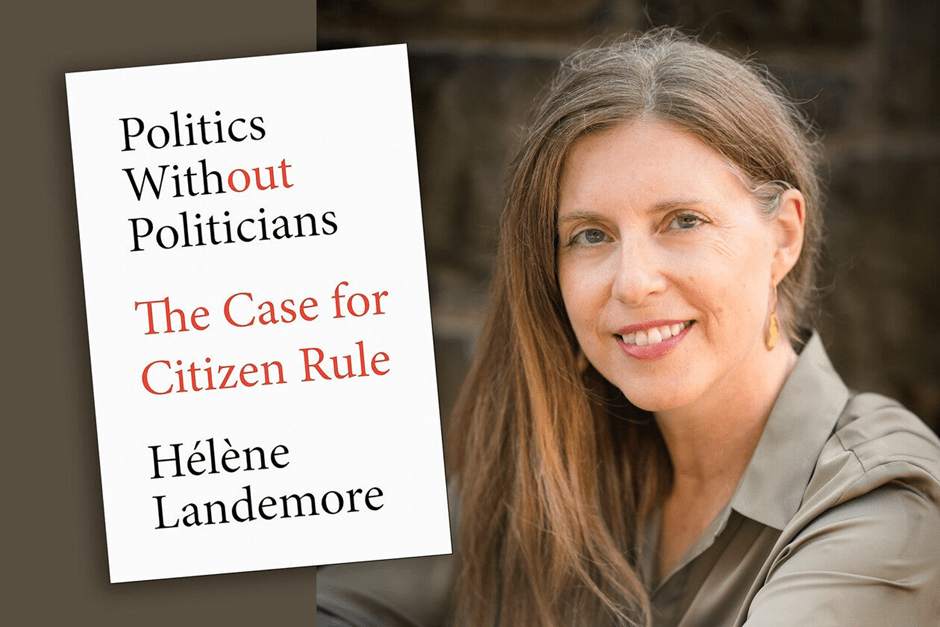
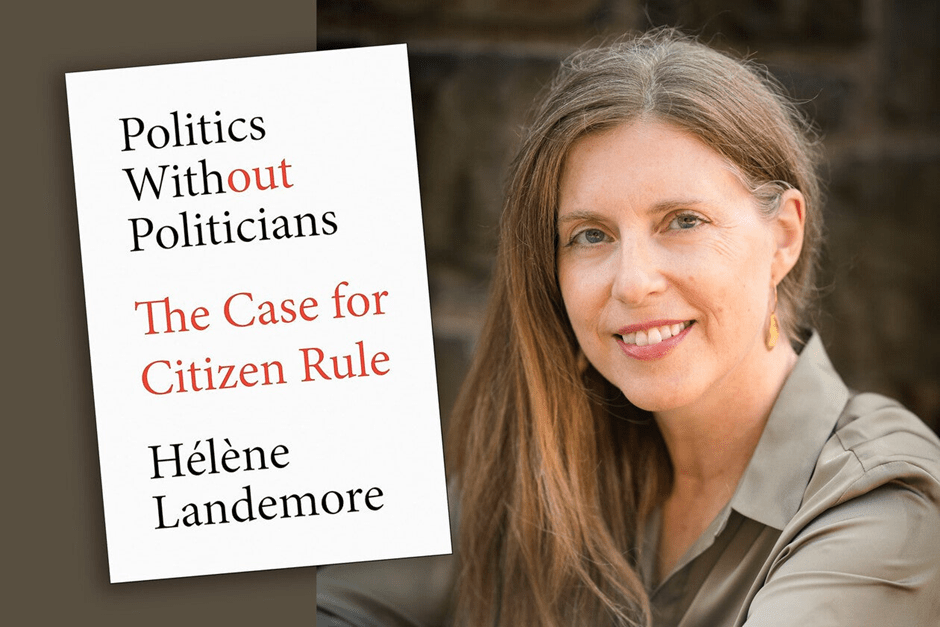
POLITICS WITHOUT POLITICIANS BOOK REVIEW


Yale political theorist Hélène Landemore has a soft spot for shy people — the wallflowers least likely to seek or desire power. She believes shy people should play a bigger role in governing. In fact, she argues they might be key to fixing democracy.
In her new book, “Politics Without Politicians: The Case for Citizen Rule” (Thesis), Landemore makes the case that, under the right conditions, everyday people, even the shy, can govern more effectively than professional politicians.
“Modern electoral systems tend to produce a professional political class — often composed of wealthy, well-connected, and ambitious individuals — that is detached from the broader public,” said the Professor of Political Science in Yale’s Faculty of Arts and Sciences. “The book argues for returning to the basic ancient Greek assumptions that politics is an amateur sport, not a professional activity, in which ordinary citizens play a direct role in governing.”
Landemore advocates for citizens’ assemblies — bodies composed of randomly selected citizens who deliberate on public issues and make policy recommendations. These assemblies — examples of which have occurred in democracies across the globe — are designed to be deliberative and informed by expert testimony, she said, but ultimately guided by the citizens’ judgment

Revisiting the Challenges Facing Canadian Higher Education: The Limits of Crisis-Thinking

By Sharon Stein UBC

Are our individual and institutional responses appropriately calibrated to the scale and complexity of the moment we are actually in?

After all, we cannot “solve” planetary and geopolitical challenges at the level of curriculum, technology, or individual resilience. We cannot, and arguably should not, seek to extend an extractive system indefinitely. And when we try to do so and fail, we may erroneously conclude that we are just not trying hard enough, rather than re-evaluating our orienting premise.

Here is where the contrast between crisis-thinking and consequence-thinking can be instructive.

Crisis-thinking asks: How do we fix this system? Consequence-thinking asks: How do we live responsibly in the wake of the consequences of the system itself?

Crisis-thinking equates agency with certainty, control, and benevolence. Consequence-thinking reframes agency as our capacity to respond to uncertain, constrained, and ethically compromised conditions with discernment, reflexivity, and relational integrity, knowing we will likely make mistakes along the way and that outcomes are never guaranteed.

We are living in an in-between time. Old frameworks are still widely used, but increasingly fragile and distrusted, and new practices, possibilities, and points of intervention appear only in fragments. This is an uncomfortable place to be. It is also the most honest one available to us.

This piece has not offered a full reckoning with our contemporary moment, and with the colonial legacies that have shaped it. This is not because such a reckoning is unnecessary, but because it cannot be rushed.

However, my sense is that if higher education is to continue mattering in this transitional time, it will not be because we successfully restored what is ending, but because we learned, slowly, humbly, and imperfectly, how to reconstruct our research and teaching by asking what responsibility looks like when growth, continuity, and innocence can no longer be assumed.

JOHN RUSKIN and CLIMATE CHANGE

In 1884, John Ruskin delivered one of the first lectures to discuss climate change and make a link to industrial pollution.

Now, with the help of a group of 13- to 16-year-olds, a new exhibition Sheffield’s unrivalled Ruskin collection is taking place at the city’s Millennium Gallery.

Storm-Cloud brings together work from the Guild of St George’s Ruskin Collection and is curated by young people, and includes video work by Jake Goodall and research by the University of Sheffield to explore the legacy of Ruskin’s groundbreaking observations.

Ashley Gallant curator of the Ruskin Collection is pictured with selection of works by J.M.W Turner. Picture taken by Yorkshire Post Photographer Simon Hulme

“Ruskin delivered his pioneering lecture, The Storm-Cloud of the Nineteenth Century, after closely observing the sky over many years and concluding that the weather was changing,” explains Ruskin curator Ashley Gallant.

“He argued that a cloud wind’ was making the weather meek and mild and unpredictable and that the filth and smoke from industry from chimneys in the north were part of the cause. It was a very, very early understanding of climate change.

“The exhibition, Storm-Cloud: The Look of the Sky, takes this lecture, which was quite controversial at the time, as a starting point to present artistic and scientific observations of our sky and climate.”

Ruskin was passionate about getting people to actually look at the world around them rather than romanticise it, as was the fashion at this time.

Ashley Gallant curator of the Ruskin Collection, Jake Goodall Senior Lecturer in Graphic Design at Sheffield Hallam University and Dr Tom Payne senior lecturer in performance at Sheffield Hallam University are pictured looking at a Rain Gauge and Sunshine Recorder Card Picture taken by Yorkshire Post Photographer Simon Hulme

“Among other things he was an artist fascinated by nature and his landscapes were more like photographs than edited and beautified.”

The new display is curated by The National Saturday Club, a group of 13 to 16-year-olds who meet weekly at Millennium Gallery to enjoy creative activities.

In 2001 the Ruskin Collection moved to the Millennium Gallery. Its original home was in Walkley, created by Ruskin himself 150 years ago and curated by his friend Henry Swan.

“Our education teams feedback that young people have a lot of climate change anxiety. The Collection itself is Victorian teaching collection, and we thought this was a great opportunity to work with young people on something they really cared about,” says Gallant.

“We decided we wanted to illustrate the lectures through looking at the sky and pulled out around 300 works from the collection that had images of clouds in and then we took quotes from the lecture, and the young people organised the images into the quotes which formed the basis of the sections of the exhibition.

“We then kept going back and removing and removing until we had four really tight sections. They then came back a month later and helped decide how each section was going to look.”

The result, says Gallant, means it looks different to most museum shows.

“They’ve completely changed the way we hang things, and they’ve made some really great choices and while we were working with them we could see them making the connections.

“The lecture goes from light to dark as Ruskin sees the weather changing and the show goes from light to dark in the same way.”

It also includes a new video work by Jake Goodall will be updated regularly throughout the exhibition and will go on display alongside research from the University of Sheffield, highlighting their work towards reversing climate damage by attempting to remove carbon dioxide from the atmosphere.

The display also forms part of an ongoing project which has been going for the last two years, Storm-Cloud, by Sheffield Hallam University’s Dr Tom Payne, who performs Ruskin’s lecture and invites artists to respond to the text by creating their own interpretations.

The project creates a growing collection of new art works or ‘notes and additions’, each responding directly to Ruskin and climate change.

Ruskin was a writer, art and social critic, artist and philanthropist. As an author he commanded international respect, attracting praise from figures as varied as Tolstoy, George Eliot, Proust and Gandhi and he was cited as an influence by Clement Attlee and the founders of the National Trust, among others.

He wrote on many things: art and architecture, nature and craftsmanship, literature and religion, political economy and social justice —a dizzying variety of subjects. He also worked tirelessly for a better society and his founding of the Guild of St George was one part of that endeavour.

The depth and range of his thinking, his often-fierce critique of industrial society and its impact on both people and their environment, and his passionate advocacy of a sustainable relationship between people, craft and nature, remain as pertinent today as they were in his own lifetime.

Simon Selligman of the Sheffield-based Guild of St George was created by Ruskin in the 1870s as a small educational arts and wellbeing charity.

“The Guild was very much inspired by the medieval Guilds across Europe of like-minded people coming together to make the world a happier healthier place.

“Ruskin came from a wealthy background so he never had to work for a living but rather than buy art for himself to fill a grand house his passion becomes how can art and access to nature and wellbeing help ordinary people who he felt were in danger of becoming machines due to the industrial revolution,” says Selligman.

“He had profound anxiety that this was not good for human beings and that human beings need access to beauty in nature and art inspired by nature.

“A lot of things in the Collection, that he created for the public good, are from him sending artists off across Europe, particularly to Venice which he loved, to draw or paint beautiful things and bring them back to Sheffield for working people to have direct access to them.”

Selligman says Ruskin’s plan had been for a number of similar museums and they would all be called St George’s Museums.

“He saw St George as symbolic figure, being brave, confronting the ills of society and Ruskin saw the dragon as industrialism.”

But in the end Walkley became the first and only museum.

“People had to walk through nature to get to the museum high up where the air was cleaner, to what was in essence a cottage he bought and extended which housed these extraordinary things form all over Europe which he hoped would inspire.

“He really admired the craftsmanship of the tool makers of Sheffield and he wanted them to see that they were artists too.”

And what does he think Ruskin would have made of today’s exhibition of his collection in the Millennium Gallery?

“I think he would have been very inspired by what Ash is doing.

“What the museum is now doing is say look we can break open this collection and get it into the dialogue of the issues of today and I hope Ruskin would have loved that. He was engaged with the issues of the day.

“I hope he would have been excited by it but one of the things about Ruskin was that you could never predict him.”

The Ruskin Collection: Storm-Cloud – The Look of the Sky is on at the Millennium Gallery, Sheffield until Sunday November 29