International Energy Association on Community Energy

Putting people at the centre of all clean energy transitions not only improves people’s lives but is also key to successfully implementing energy and climate policies. Local energy communities, or community-based energy projects, are showing clear benefits across the globe in deploying renewable technologies, improving efficiency, supporting reliable power supply, reducing bills, and generating local jobs. At the same time, these initiatives are garnering increased attention as effective vehicles towards more inclusive, equitable and resilient energy systems.

Digital platforms and tools are making it easier to set-up cooperatives, engage stakeholders, make investments, and exchange electricity. An increasing number of countries are allocating significant funds to support community-based clean projects. The Italian National Recovery and Resilience Plan has allocated EUR 2.2 billion 1 to support energy communities and self-consumption, while the USD 370 billion United States Inflation Reduction Act of 2022 offers additional financial incentives for community-based clean energy projects. The IEA recently organised discussions to explore and share experiences about the role that energy communities can play in supporting clean energy transitions.

With ever growing pressure to accelerate decarbonisation and to mitigate impacts of the energy crisis on households and businesses, community-based energy communities can help address numerous challenges faced by power systems, including losses, grid congestion and the need to accommodate growing peak demand. Recently, the IEA estimated that one gigatonne of carbon dioxide emissions come from grid losses, equal to almost 3% of current global energy-related CO2emissions. Local community-based generating, sharing, and consuming of electricity can significantly avoid these losses and enhance energy efficiency. For example, in northern Perth in Australia, a battery resource shared by 119 households resulted in collective savings of over AUD 81 0002 during a five-year period. The battery also helped ease the strain on the grid by enabling an 85% reduction in consumption of electricity from the grid at peak times for participating households. The energy community of Magliano Alpi in the Italian Alps developed tools to forecast energy generation and demand and share electricity, enabling the community to use their solar photovoltaic systems and cover 35% of their electricity needs more effectively. Increased reliance on their own generation resources during peak demand periods alleviated grid stress and helped defer expensive infrastructure upgrades.

Enhancing energy efficiency and community benefits through local generation and sharing

Providing customers with access to their energy production and consumption data is crucial to the success of energy communities, raising awareness about the impacts of individual behaviour and underscoring the economic benefits of being part of the community. Software based on machine-learning is also widely used to optimise energy efficiency and deliver financial savings. Recently, peer-to-peer digital trading on blockchain platforms have been tested to enable citizens to exchange energy within the community. Such initiatives foster collaboration and trust among prosumers and consumers. For example, in the Indian city of Lucknow, residents were able to sell their rooftop electricity production at 43% below the central market price through the use of digital tools, allowing other residents to benefit from local clean energy while also cutting their electricity bills.

Digital tools boost the potential of local energy communities.

Developed by people for people, local energy communities are an effective means of maximising socioeconomic empowerment. As they depend on trust, both within and outside the community, these systems involve and educate people who would otherwise be excluded or passive in clean energy transitions. More than this, they have become tools to help overcome historical societal inequalities in energy systems. For example, the RevoluSolar energy initiative was the first photovoltaic community founded in a Brazilian favela, enabling renewable energy access for 30 families. The community opted to re-invest the profits from the projects into charities and jobs training to tackle rising rates of local unemployment. This ability to determine where, how and to whom the revenues from the project are distributed, improved overall citizen welfare in the favela. Not only this, but it enabled the community to protect the citizens from rising energy prices.

Community initiatives are empowering citizens.

Energy communities also help develop local value-chains, jobs, and skills. The Lyndoch residential community microgrid project, which interconnected over 30 homes via a tiered grid system (from household to household, to the village, to the national grid) was the first smart embedded residential rooftop microgrid in South Africa. The pilot project is co-owned and maintained by the utility (Eskom), but members of the community were taught and certified by industry to assume roles in the development, installation, maintenance, operation, and ownership of the energy system. Such initiatives help ensure the sustainability and longevity of projects while also demonstrating the value of enhancing citizen engagement in localised clean energy transitions.

Local value-chains gain

Energy community models can be effective mechanisms to deliver clean energy transitions. They not only illustrate the benefits of place-specific interventions, but also highlight the added value of inclusive people-centred approaches. Better access to financing and support, regulatory reforms, and sharing of experiences could give communities around the world greater access to local, clean and affordable energy. For instance, the European Parliament has recently provided funding for the creation of an advisory hub and support service to help collect and disseminate best practices and provide technical assistance for community initiatives across the European Union. Further mapping of initiatives and benefits is underway as part of the IEA People-Centred Clean Energy Transitions Programme and the Digital Demand-Driven Electricity Networks Initiative (3DEN).

Citizen engagement is key to accelerating clean energy transitions.

This work forms part of the Digital Demand-Driven Electricity Networks Initiative, supported by the Clean Energy Transitions Programme, the IEA’s flagship initiative to help energy systems worldwide move towards a secure and sustainable future for all.
We Need a Revolution in Universities to Help Humanity Solve Global Problems

 Guest Blog by Dr Nicholas Maxwell, Science and Technology Studies, UCL

The world is in a state of crisis.  Global problems that threaten our future include: the climate crisis; the destruction of natural habitats, catastrophic loss of wildlife, and mass extinction of species; lethal modern war; the spread of modern armaments; the menace of nuclear weapons; pollution of earth, sea and air; rapid rise in the human population; increasing antibiotic resistance; the degradation of democratic politics, brought about in part by the internet.  It is not just that universities around the world have failed to help humanity solve these global problems; they have made the genesis of these problems possible.  Modern science and technology, developed in universities, have made possible modern industry and agriculture, modern hygiene and medicine, modern power production and travel, modern armaments, which in turn make possible much that is good, all the great benefits of the modern world, but also all the global crises that now threaten our future.

What has gone wrong?  The fault lies with the whole conception of inquiry built into universities around the world.  The basic idea is to help promote human welfare by, in the first instance, acquiring scientific knowledge and technological know-how.  First, knowledge is to be acquired; once acquired, it can be applied to help solve social problems, and promote human welfare.

But this basic idea is an intellectual disaster.  Judged from the standpoint of promoting human welfare, it is profoundly and damagingly irrational, in a structural way.  As a result of being restricted to the tasks of acquiring and applying knowledge, universities are prevented from doing what they most need to do to help humanity solve global problems, namely, engage actively with the public to promote action designed to solve global problems.  Universities do not take their basic task to be public education about what our problems are, and what we need to do about them.  As a result of giving priority to the pursuit of knowledge, universities do not even give priority within academia to the vital tasks of articulating problems of living, local and global, and proposing and critically assessing possible solutions – possible and actual actions, policies, political programmes, ways of living.

Universities are in part responsible for the genesis of the global problems we face today, not because they have pursued scientific knowledge and technological know-how in such an extraordinarily successful way, but because they have done so in a way that is dissociated from a more fundamental concern to help humanity learn what our problems are, and what we need to do about them.  We need urgently to bring about a revolution in universities around the world, wherever possible, so that their central task becomes to help humanity learn how to solve local and global problems of living, so that we may make progress towards a good, civilized world.  Almost every branch and aspect of the university needs to change.  Every university should seek to take a leading role, both by itself bringing about the changes that are required and advocating that this needs to be done on a world-wide basis.

I first spelled out in detail the argument for the urgent need for an academic revolution in From Knowledge to Wisdom (Blackwell, 1984), available free online at https://philpapers.org/rec/MAXFKT-3 .  A recently published paper gives a vivid account of my work on the issue over the decades: see “How Universities Have Betrayed Reason and Humanity—And What’s to Be Done About It”, 2021, Frontiers in Sustainability.  For a list of 23 structural changes that need to be made to universities to enhance their capacity to help humanity solve global problems effectively and rationally, see https://www.ucl.ac.uk/from-knowledge-to-wisdom/whatneedstochange .

PROJECT BASED LEARNING

A recent book from the Organisation for Economic Cooperation and Development (OECD) highlights how universities are not providing the majority of their students with the critical thinking skills required by employers. In their study analysing data from the US, UK, Italy, Mexico, Finland and China, 45 per cent of students were found to be proficient in critical thinking, with only 20 per cent having an “emerging” talent.

Crucially, the OECD’s definition of critical thinking skills involves not only thinking, but the application of this thinking to real-life scenarios through the interrelated processes of “inquiring, imagining, doing and reflecting”. This definition echoes the Brazilian educator and philosopher Paulo Freire’s concept of “critical consciousness”, whereby students inquire about and develop an understanding of society in order to take action and transform their communities.

While research from cognitive sciences focuses on how critical thinking skills should be taught through direct instruction, an argument should also be made that direct instruction it precisely what hinders students from developing critical thinking skills in the first place. How many university tutors have reflected upon the ways in which an outcome-driven school system has presented them with undergraduate students who want to be told what to do and what to think? How many university tutors have found themselves meticulously preparing their first-year undergraduate students for their assessments? How many university tutors have felt themselves complicit in perpetuating an absence of critical thinking through direct instruction?

If not direct instruction, what might be another solution to developing critical thinking in our students? The obvious answer is to think about other pedagogical approaches, which include students practically applying their learning and which develop the key competency of independent learning – an established prerequisite to critical thinking.

To go back to the OECD’s book, what is perhaps most surprising is that university courses that are more vocational seem to score worse in terms of developing students’ critical thinking skills. Of course, there are utilitarian reasons for this, with some of these courses leaning more towards training than education. But the fact that students on these courses will often benefit from the practical application of their learning through partnerships in their local community offers a clear opportunity for the take-up of pedagogies that have been proven to develop critical thinking skills.

Commissioned by Enactus UK, a non-profit organisation supporting young people in schools and universities to engage in social action and build sustainable community enterprises, I undertook a review of research into pedagogies used with 11- to 19-year-olds where the students engaged with their local communities on projects of their own devising. In the review, I found substantive evidence of positive outcomes when students had experienced one of two pedagogical approaches: project-based learning (PBL); and youth participatory action research (YPAR).

With both PBL and YPAR, students work in groups on projects of interest that will bring about positive change in their local communities. Examples of PBL from Enactus UK’s work with secondary school students through their NextGenLeaders programme include: Project Pawject, helping the homeless in Norwich through the selling of dog beds; Foodprint, providing people with affordable food that would otherwise go to waste in Nottingham; and Coding with Codex, delivering inclusive and affordable computer coding courses for neurodivergent learners.

For each of these projects, students work through processes with a facilitator in a way that mirrors the OECD’s definition of critical thinking skills: they “imagine and inquire”, developing and researching a problem and thinking about beneficiaries and barriers involved; they take action, working in partnership with local businesses and third sector organisations; and they receive feedback on their actions, helping them reflect and set actions and targets for the future development of their projects.

YPAR is differentiated from PBL in that it also involves the explicit teaching of research methods to students. This formal understanding of research methods helps students gather data to develop their problem statement as well as design a project that will impact positively upon their target beneficiaries. To date, YPAR is relatively underused in the UK and tends to take place in the US where students work specifically with and for marginalised communities.

Celebrating the Community Energy Pioneers in Derbyshire

  • by helen
  • 21 September 2022
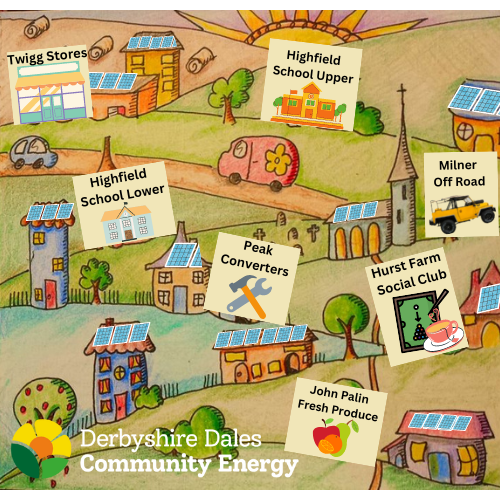
The organisations currently working with Derbyshire Dales Community Energy for solar panel installations in the not too distant future.

There is a growing appetite for the development of community energy programmes across the UK. Currently over 400 proactive programmes exist in the UK according to Community Energy England’s State of the Sector report, which  have generated over £3 million of community benefits.

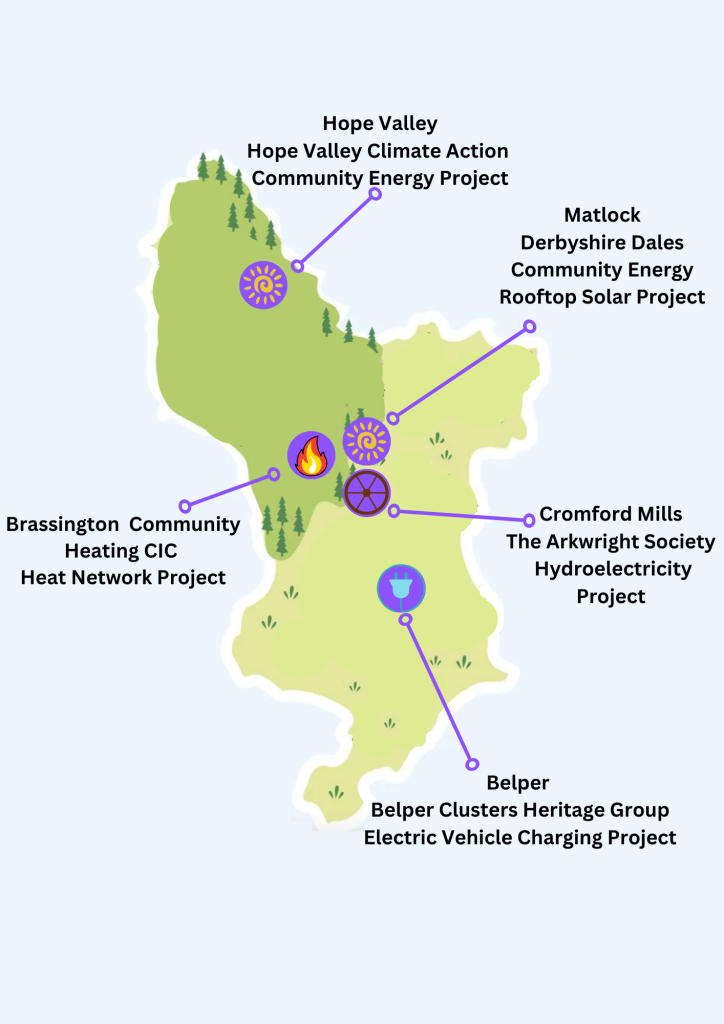
In Derbyshire there are currently five second stage 1 Rural Community Energy Funded (RCEF) programmes, which have been supported by the Midlands Net Zero Hub. These include the Derbyshire Dales Community Energy programme in Matlock and the Derbyshire Dales, Arkwright Society programme at Cromford Mill, Hope Valley Community Energy, Solar electric vehicle (EV) charging in Belper, and a Heat network programme in Brassington. There are
at least two others being considered – a Hydro scheme in Darley Abbey and another similar scheme in Belper.

The 5 Confirmed RCEF funded Community Energy Projects in Derbyshire


Just like the pioneering Georgian engineers such as Arkwright and Smedley – who used the abundant rivers and streams to power the industrial revolution in the Derwent Valley – these renewable energy democracy pioneers are now seeking ways to ramp up the application of solar energy in our schools and businesses.

1 Second Stage Programmes move from feasibility studies to the stage of implementation of solar panels on buildings – both community owned and commercial -who agree to being involved. Derbyshire has more RCEF programmes than any other County in England.

New investment partner energises and enhances plans for Derbyshire Dales community energy scheme. Plans for a social renewable energy scheme in Matlock have been supercharged by a new partner organisation which has identified potential to harness up to 1 million Watts of solar electricity from sites in the district. Derbyshire Dales Community Energy Ltd (DDCE) has enlisted the support of Shropshire cooperative Sharenergy to help guide the process, drawing on its experience of raising more than £20 million through community share offers linked to similar initiatives all over the UK.

The first two Matlock rooftop sites, Highfields School and Twiggs on Bakewell Road, have already passed feasibility assessments to install solar panels. These solar arrays will have an approximate capacity of 220 kilowatts, equivalent to the energy needed to power around 25 average households. But Sharenergy says there is scope to go far beyond that.
DDCE spokesperson and Chair of its board of directors, Dr Steve Martin, said: “Sharenergy has identified an ambitious opportunity for us to ensure the longevity and stability of the group. The plan is to take community energy in Derbyshire to the next level by installing 1MW worth of solar photovoltaics (solar PV) in up to nine or 10 different locations ( see first stage portfolio sites below).

“The project partners plan to install the first two solar arrays on top of buildings in Matlock in 2023. This will not only be providing a significant amount of renewable energy, but it will also make DDCE more resilient to the potential risks associated with small scale solar PV. We also believe this will help safeguard the future energy security of our schools and other community buildings as well as key businesses in Derbyshire.”

Dr Martin also added: “There are a growing number of other sites in the pipeline that could potentially work well, but they need further analysis and commitment from their owners and trustees. One of the main factors is that a good solar site doesn’t only need roof space for the PV installation. For a community project to be financially viable, it’s important that a large portion of the energy generated by the solar is also consumed on site.”

Derbyshire Dales Community Energy Ltd has gone out to tender to several local
and regional solar installers for the following sites:
 Twigg Stores 
 Highfields School Lower  
 Highfields School Upper  
 Hurst Farm Social Club 
 John Palin Fresh Produce 
 Peak Converters 
 Milner Off-Road 

Once the installation tenders are received, it will then be possible to move quickly forward on negotiating with each of these sites to establish some price options along with setting out the legal agreements for leasing their roof space. This will allow the programme to move forward on initiating a share offer both regionally and nationally. If all goes according to plan, DDCE expects to release shares this autumn, funding the first two installations in early 2023.

DDCE volunteers have also been busy working to set up a community energy hub which will link all the existing, and potential new, projects around Derbyshire, so they can coordinate resources and mutual support. The team is celebrating news that Derbyshire County Council have granted Derbyshire Dales Community Energy Ltd £50,000 to fund a Community Hub Coordinator to support the existing five Rural Community Funded Stage 2 programmes in Derbyshire and other community energy developments in Derbyshire. The aim is to widen the uptake of community energy activities across the county to realise the net zero carbon targets of county and district councils, in addition to acting as a catalyst to encourage wider community action and tangible engagement.

For more details, contact derbyshiredalescommunityenergy@gmail.com.

Transformation Moment

Transformation Moment – can Britain make it to the Age of Clean?

Preface

This pamphlet is a ‘Call to Arms’. It comes at a time of confused and divisive global politics, accelerating climate damage and a dangerous retreat into tribal answers to international problems. The UK’s contribution has been to add to the confusion.

Britain’s Brexit decision may or may not run its course. If so, it will almost certainly end in tears. Issues that call for a new ‘post 1945’ international consensus are being met by a pre-1939 resurgence of narrow nationalisms. These distractions and divisions obscure the bigger challenge of a world spinning towards climate crisis.

Energy policies, on their own, are no ‘magic bullet’ solution to this crisis. What they offer is a way into radically different choices that are still open to us; ones that might just limit the climate crises, allowing us to live more lightly on the only planet we have.

With or without Britain’s approval, an energy revolution is taking place. The forces that transformed telecommunications are doing the same to energy. Britain’s difficulty is that, faced with a host of transformative technologies, the government chose to throw its weight behind the past rather than the future: subsidising non-renewable rather than renewable energies; penalising ‘clean’ solutions in favour of ‘dirty’, and propping up a rigged energy market.

The most exciting issues raised within this pamphlet touch as much upon ‘democracy’ as ‘technology’.

Countries leading the race into the Age of Clean have benefitted from strong national leadership; changing energy market ground-rules and the thinking that underpins them. But the real momentum for change is coming from the grass roots; from empowered localities and included communities. People are becoming the architects of tomorrow’s solutions rather than just recipients of today’s problems.

Across the planet, towns, cities, villages and communities are emerging as critical players in the democratisation of energy. They are the key to a different energy politics; one which focusses as much on how we save and share, as on what we produce and consume.

Transformation Moment is a narrative journey, not a ‘Techies manual’. It will be overtaken by innovations within the emerging clean-technology sector. What it explores is how energy thinking is being turned on its head, where this is happening … and how Britain can join in.

Today’s global leaders are demonstrating how to live within reducing carbon budgets, how ‘clean’ and ‘smart’ can displace ‘dumb’ and ‘dirty’, and how active citizens (and localities) can drive the transition to a sustainable future.

If Britain is to become a part of this process it must fundamentally restructure its energy market –

Mandating the shift to a more interactive and decentralised Grid

Introducing a UK right of ‘local supply’

Establishing a national framework of carbon budgeting (including the reduction of grid carbon levels to 50 gCO2/kWh by 2030), and

Setting out duties to deliver annual reductions in total energy consumption

Such a change involves a wholesale re-think of tomorrow’s energy markets and the rules that govern them. Germany, California, Denmark and Sweden all understood that, to do so, a raft of policies had to be changed at the same time. Germany and California passed a dozen pieces of separate legislation in single sessions. Denmark, the real pioneer, now treats ‘whole system’ transformation as the norm. Norway, the Netherlands and (perhaps) Germany are taking ‘transport’ into the Age of Clean too.

Countries serious about the Paris Climate Agreement recognise that energy saving and energy storing become as important as (clean) energy generation. Seamlessly, the carbon footprint of food policies and waste re-use will become connected to transport, planning and air quality strategies. Carbon recycling and re-use will be as important as carbon reduction.

What can be produced, used and shared locally are already emerging as cornerstones within new national energy security thinkingWithin this, the role of the State is also being re-defined; providing the legislative, regulatory and fiscal frameworks that underpin transformational change and (increasingly) taking more direct responsibility for the trans-national and intra-national balancing mechanisms that keeping the lights on still requires. But it is a politics of empowerment and engagement that is driving the change.

This is the ‘Age of Clean’. Transformation Moment sets out to explore some of the ways in which Britain might become part of it, by –

re-thinking the Grid,

making energy ‘systems’ more important than individual technologies,

putting ‘clean’ before ‘dirty’,

consuming less before producing more,

making citizens and ‘local’ the drivers of change,

putting carbon reduction duties on energy networks, and

making ‘smart’, ‘clean’ and ‘light’ the new benchmarks of sustainable economics.

Britain does not face a crisis of ‘keeping the lights on’. The challenge is just to create an energy system that is sustainable, accountable and affordable for all. This is why the ‘Age of Clean’ needs a completely different framework of energy thinking.

Transformation Moment recognises that these changes form a battleground. The conflict is not just between the polluting and non-polluting, the national and the local, or between new technologies and old. Ultimately, the most critical issues are rooted more in questions of ‘power’ – democratic power – than in ‘energy’.

Who should own, control and hold to account the energy systems that will define Britain’s future? Transformation Moment is an invitation to shape the answer.

Alan Simpson

May 2017

Pages: 1 2 3 4 5 6 7

© 2023 Alan Simpson | Powered by Beaver Builder

Some Further thoughts on Green Washing

Greenwashing is a form of climate action delay so deepening our understanding may be the first step to preventing it. Or at least being able to call it out. And that is exactly what financial think thank Planet Tracker has done. Its new report deciphers six types of greenwashing:

Greencrowding: hiding in a crowd of other ‘green’ (but vague) do-gooders but basically doing nothing new.

 Greenlighting: spotlighting a particularly green feature of operations or products to draw attention away from environmentally damaging activities being conducted elsewhere. For example, the entire fossil fuel industry.

 Greenshifting: implying that the consumer is at fault and shifting the blame to individuals not the company.

 Greenlabelling: where marketers call something green or sustainable, but a closer examination reveals this to be misleading or sometimes completely false.

 Greenrinsing: regularly changing ESG targets before they are achieved. this has been identified at Coca-Cola and PepsiCo, notes the report.

 Greenhushing: refers to corporate management teams under-reporting or hiding their sustainability credentials to evade investor scrutiny. 

SAFE AND JUST EARTH SYSTEMS

Humanity is well into the Anthropocene , the proposed new geological epoch where human pressures have put the Earth system on a trajectory moving rapidly away from the stable Holocene state of the past 12,000 years, which is the only state of the Earth system we have evidence of being able to support the world as we know it . These rapid changes to the Earth system undermine critical life-support systems with significant societal impacts already felt and they could lead to triggering tipping points that irreversibly destabilize the Earth systems. These changes are mostly driven by social and economic systems run on unsustainable resource extraction and consumption. Contributions to Earth system change and the consequences of its impacts vary greatly among social groups and countries. Given these interdependencies between inclusive human development and a stable and resilient Earth system an assessment of safe and just boundaries is required that accounts for Earth system resilience and human well-being in an integrated framework . Rockstrom et al propose a set of safe and just Earth system boundaries (ESBs) for climate, the biosphere, fresh water, nutrients, and air pollution at global and sub global scales. These domains were chosen for the following reasons. They span the major components of the Earth system (atmosphere, hydrosphere, geosphere, biosphere, and cryosphere) and their interlinked processes (carbon, water and nutrient cycles), the ‘global commons’ that underpin the planet’s life-support systems and, thereby, human well-being on Earth; they have impacts on policy-relevant timescales; they are threatened by human activities; and they could affect Earth system stability and future development globally. Our proposed ESBs are based on existing scholarship, expert judgement, and widely shared norms, such as Agenda 2030. They are meant as a transparent proposal for further debate and refinement by scholars and wider society.

Rockstrom et al use three criteria to assess whether adhering to the safe ESBs could protect people from significant harm (Box 1):”interspecies justice and Earth system stability” “intergenerational justice” between past and present generations  and present and future generations ; and “intragenerational justice” between countries, communities, and individuals through an intersectional lens.

These criteria sit within a wider Earth system justice framework that goes beyond planetary and issue-related justice to take a multi-level transformative justice approach focusing on ends (boundaries and access levels) and means.

Interspecies justice and Earth system stability

Interspecies justice aims to protect humans, other species and ecosystems, rejecting human exceptionalism. In many domains, interspecies justice could be achieved by maintaining Earth system stability within safe ESBs.

Intergenerational justice

Intergenerational justice examines relationships and obligations between generations, such as the legacy of greenhouse gas emissions or ecosystem destruction for youth and future people.

Achieving intergenerational justice requires recognizing the

potential long-term consequences of short-term actions and

associated trade-offs and synergies across time. They define two types of intergenerational justice: (between past and present; whether actions of past generations have minimized significant harm to current generations and (between present and future; the responsibility of current generations to minimize significant harm to future generations.

Intragenerational justice: between countries, communities and

individuals (I3)

Intragenerational justice includes relationships between present individuals, between states (international), among people of different states (global) and between community members or citizens (communitarian or nationalist). Intersectional justice

Considers multiple and overlapping social identities and categories (for example, gender, race, age, class, and health) that underpin inequality, vulnerability and the capacity to respond. Achieving intragenerational justice means minimizing significant harm caused by one country to another, one community to another and one individual to another. More details at: https://www.nature.com/articles/s41586-023-06083-8

New Ways of Seeing the World: Big History and Great Transition

Opening essay for a GTI Forum

David Christian

May 2023

As the first astronauts peered down on Earth from space, they saw the planet anew. They all had the same epiphany, as the sight of one small, fragile world, embedded in a huge universe briefly replaced the multiple, ever-changing impressions of everyday life. To build a better future, we will all need a new and more capacious perspective on our world, because the cracked and myopic perspectives of so much modern thought and debate have stymied action by hiding the colossal scale of change and discouraging global collaboration.

Fortunately, wider and more integrated ways of perceiving today’s world are working their way into modern scholarly thinking, such as the “Big History” framework, with which I am associated.1 Our challenge today is to normalize more expansive ways of seeing and thinking that can offer the guidance, motivation, and hope needed to unite humans behind the colossal project of the Great Transition.

The global gestalt shift in thinking, education, and public discourse is already under way, and that augurs well for the future. Indeed, changing how people see the world may prove easier than changing our material technologies or the social and economic structures within which we live. But new ways of seeing and thinking will be just as important, because without the guidance and inspiration they can provide, our species will keep repeating old mistakes as it drifts aimlessly towards catastrophe.

The close-up lenses that dominate modern scholarship, education, and debate are far too narrow to let us see such vast changes, and a blinkered vision has constrained effective action. We are like ants on a charging elephant, confused by the jolts and tremors shaking our world, because the limited views of discrete disciplines and competing loyalties let us see only what is right in front of us. Take any conventional high school or university history course. It will be dominated by recent centuries, and by the stories of particular regions or cultures or nation-states. It can teach much about particular communities and identities, but the lens is far too small to let us see the larger historical trajectories that led to the Anthropocene. And to fully understand our impact on the biosphere, we need an even wider lens, one that can embrace the history of Planet Earth and of life on Earth over several billion years. Yet few of us acquire more than a fragmented, lop-sided, and compartmentalized understanding of planetary history.

For the full text: https://greattransition.org/gti-forum/big-history-christian

EMOTIONS AS A BASIS FOR ECOLOGICAL BEHAVIOURAL CHANGE


The question is urgent: emotions about climate change do not directly lead to behavioral change, what is needed? Yesterday de Volkskrant published an interview with Martha Nussbaum, following her latest book ‘Justice for animals: our collective responsibility.’ I really want to share the last paragraph of the interview with you:
“Making people feel guilty is not the way to bring about positive behavioural change. There are three emotions that I think do take this issue forward. The first is wonder at the complexity and beauty of animals. That prompts us to protect them. The second is compassion for the predicament they are in and that we have caused. That situation leads us to the third emotion, a specific kind of anger, which I call transitional rage. You look at the past, look away from it, and think: that shouldn’t happen in the future. That’s the emotion I feel most often, and that I try to cultivate.’
A new valuable starting point for planetary citizenship in education.
Full interview: https://lnkd.in/egCuEBUC.

REGENERATIVE CULTURES:LEARNING AND UNLEARNING

In an earlier blog I suggested that we are beginning to see evidence of avoiding using the word “sustainability.”  “Sustainability is steadily falling into disrepute, mainly because of its reformist piecemeal applications, which exclude wholesale systems change.” In its place terms such as “regenerative paradigms” have come into play. In its broadest sense this encompasses a change in human culture. One of the keyways we can tackle our unsustainability is by adopting a re- generative human culture. This means adopting a healthy, resilient, and adaptable way of life that cares for the planet and cares for life by creating an awareness that this is the most effective way to create a thriving future for all of humanity. Most proponents of this change argue that this is not simply a technical, economic, ecological, or social shift, it must go hand in hand with an underlying shift in the way we think about ourselves, our relationships with each other and with life. This shift in thinking is a movement away from intellectual rigour, a space in which academics tend to feel most comfortable towards relational rigour andwhich recognises the complex and life sustaining interconnections between human and non-human beings, highlighting the responsibilities that such relationships necessarily entail. This creates the necessary epistemic preconditions for such relationships to flourish through respect and trust, reciprocity, accountability, and consent.

 According to the authors of Transforming Universities in the Midst of a Global Crisis-this reorientation toward a regenerative relational educational paradigm is already underway. Examples include workshops and conferences on community energy, community education, localism, resilience, transition towns, interdisciplinary collectives, radical reading groups and various other forms of “edge work “are all part of this growing and evolving movement. But for it to work it must embrace those liminal places that sit both within and beyond the university-such as experimental and co-creative endeavours, where multiple pedagogies, cosmologies, epistemologies and more collide. These critical encounters generate what some refer to as the third space. It is in these messy and necessarily deceptive spaces that re-generative eco relational possibilities arise. Ultimately this movement involves overhauling the wholesale colonial mindset with its roots in ideas of certainty, permanence, growth, progress, and dominion. All of which are deeply antithetical to a regenerative relational educational movement. Ultimately, the challenge lies in, deconstructing and unlearning this worldview and instead cultivating an ethos of inter-connection of the primary basis for learning. Examples of this already exist such as the University Sydney’s celebrated social ecology programme. By participating in this programme, a generation of conservationists, activists and educators have benefited enormously from the deep appreciation of how transformative learning expands consciousness in general towards a more fundamental ecological consciousness. Social ecologies seeks to foster an understanding of our ecological interconnected connectedness, including our relationship with each other as a means of re engaging with life and all its complexity. In another ground-breaking course at Murdoch University -its environmental ethics course is the first of its kind in Australia. This course focuses on ecofeminism and eco-philosophy in practice; each  of which critically explores the interconnected structural forces driving the domination, control and  oppression of nature and women.

 Several of these new educational approaches have contributed to one of the more successful global initiatives in recent years, called the Ecoversities Alliance( https://ecoversities.org ), an international hub for alternative regenerative relationship educations from around the world. As an emerging knowledge change movement and “silent learning revolution,” the alliance has developed new ways  of contributing to the transformation of teaching and learning, placing significant pressures on mainstream institutions to rethink their teaching practices. Founded in 2008, the Alliance makes plain his opposition to the unjust and destructive and extractivist orientation of corporate capitalism.  However, the extent to which such projects will disrupt the general market orientation of the modern university remains less clear. “For many of today’s students, the modern university experience is instrumentalist( aimed at job attainment and narrowly career orientated) dissociative( studying rather than experiencing) atomised, terminally irrelevant and boring.

Taking all these insights into our education system is essential if we are to promote deep ecological learning that sustains all life forms and which views the Earth not just in terms of dominion, but in terms of coexistence and balance.  A key challenge will be how universities in future might engage with diverse knowledge which encourages earth centred learning. Those involved in this transformation advocate that this must develop from a values framework that extends care and compassion beyond the realm of the human, towards the vast and complex webs of life in which we exist.